Why Most Clips Get Stuck at 300 Views (And How to Break Through)
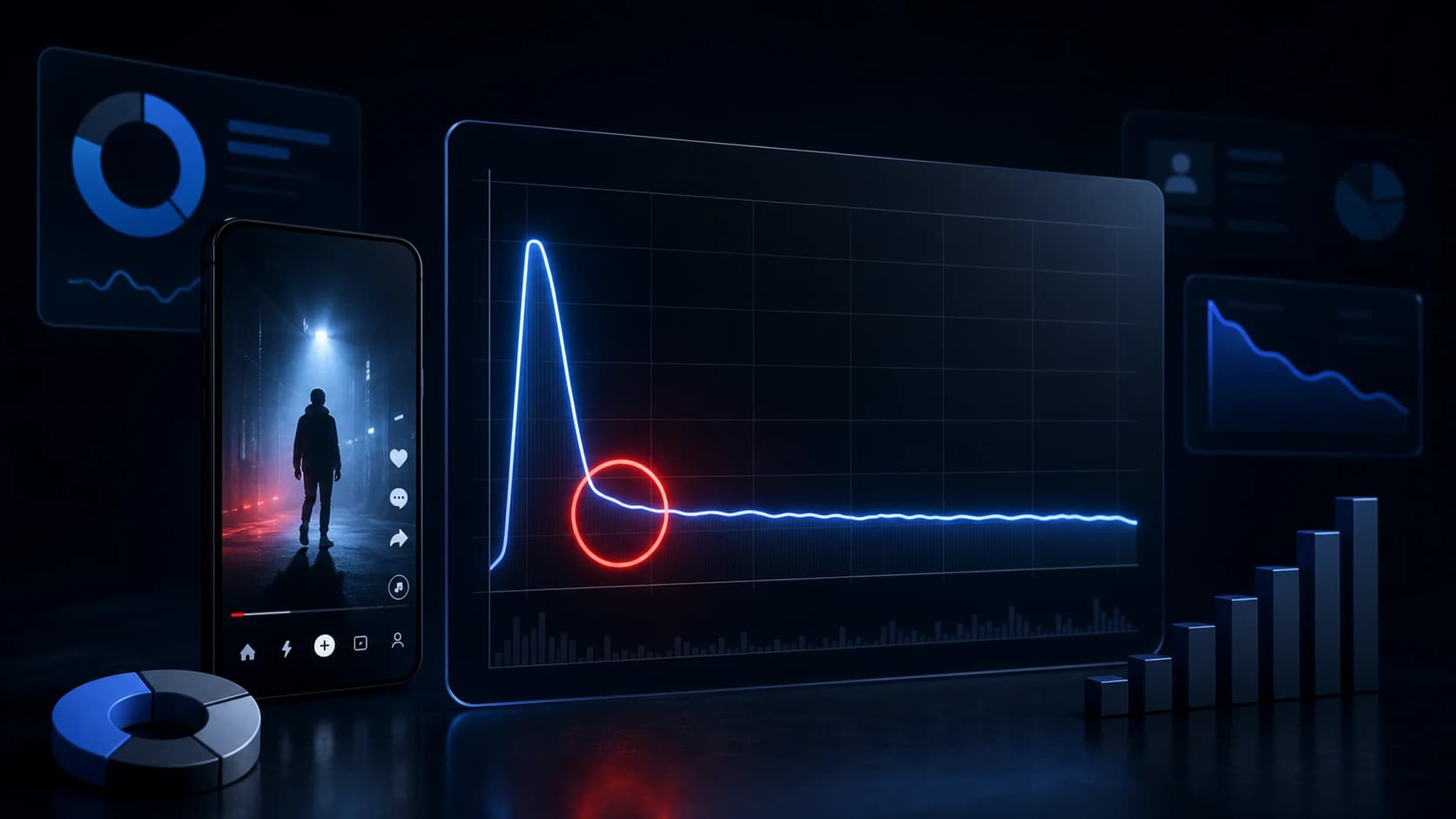
If you've ever posted a short-form video that shot up to 200 or 300 views in the first hour and then completely flatlined, you're not alone. This is the most common frustration for new creators on YouTube Shorts, TikTok, and Instagram Reels. It feels like the algorithm is actively suppressing the account, or worse, that a shadowban is in effect.
The reality is much simpler, and much more brutal: the video failed the Spark Phase test.
The algorithm doesn't hate anyone. It's just ruthlessly efficient at protecting user attention. When you understand how the distribution engine actually works, you can stop guessing and start engineering clips that break past the 300-view barrier.
The Three Phases of Algorithmic Distribution
One useful way to think about short-form distribution is as three stages: Spark, Ignition, and Wildfire. You can think of these stages as the early audience test, the broader distribution test, and the viral expansion phase.
Spark Phase
300 views
Early audience test
Ignition Phase
10,000 views
Broader distribution test
Wildfire Phase
1M+ views
Viral expansion phase
When a video is published, it enters the Spark Phase. The platform shows the clip to a small seed audience, usually between 200 and 500 people. These are real users, often a mix of followers and people who've engaged with similar content recently.
During this phase, the algorithm is measuring one primary metric above all others: the three-second retention rate. It wants to know if people are stopping their scroll to watch the video, or if they're swiping past it immediately.
If a high percentage of that seed audience swipes away before the three-second mark, the algorithm concludes that the video isn't engaging. It stops the distribution to protect the user experience. The video flatlines at 300 views. It never reaches the Ignition Phase, where it would be shown to thousands, or the Wildfire Phase, where it goes viral.
The 3-Second Hook Problem
The reason most clips fail the Spark Phase test is almost always a weak hook. Many creators treat a short-form clip like a traditional video, leaving in slow introductions or conversational setups that take too long to get to the point.
In the short-form attention economy, there's no time for a setup. If the first frame of the video doesn't create immediate visual or auditory curiosity, the viewer is gone. A clip that starts with someone taking a breath or saying something generic usually loses people before the real moment begins. The viewer hasn't been given a reason to care yet.
A strong hook frontloads the most controversial, surprising, or valuable statement in the entire video. It forces the viewer to stop scrolling just to figure out the context of what was just said.
How Clipmax Engineers the Perfect Hook
Fixing this manually is tedious. It requires scrubbing through hours of footage, finding the exact moment of high tension, cutting out the filler words, and manually adding bold text to the first frame. This is why most creators give up.
This is exactly the problem Clipmax's Auto Clipping workflow was built to solve. Instead of guessing what a good hook looks like, you let the system identify the highest-retention moments for you.
Auto Clipping settings
When you feed a source video into Clipmax, the Auto Clipping engine analyzes the audio and pacing to find the statements most likely to stop a scroll. It automatically trims the slow buildup before the statement, ensuring the video starts exactly on the action.
But Clipmax goes much further than just finding the right moment. The platform includes specific, toggle-able features designed to engineer virality in those crucial first three seconds.
Opening Hook
Clipmax can automatically find the most engaging 2-4 second segment of the generated clip and place it at the very beginning. This creates an open loop. The viewer sees the most exciting part first and has to keep watching to see how the video gets there.
Title Overlay
The AI system creates a customized, catchy title and adds it to the top of the clip in an engaging font. This gives the viewer immediate context and a reason to stay.
Dynamic Captions
A massive percentage of users scroll with their sound off. If a hook relies entirely on audio, half the potential audience is lost immediately. Clipmax offers 18 unique, punchy, and eye-catching caption styles, not boring classic subtitles, ensuring the hook is both visual and auditory from millisecond zero.
Because these features are fully toggle-able, you keep control over the feel of each clip while using settings specifically optimized for retention.
The Account Setup Variable
There's one more variable that can hold clips back before they even reach the Spark Phase test: a cold account. If an account is brand new, or if it's been posting inconsistently across multiple unrelated topics, the algorithm doesn't have a reliable category for it. It doesn't know who to show the videos to.
When the algorithm doesn't know the audience, it shows the video to a random seed group. That random group is unlikely to be interested in the specific niche, which means the three-second retention rate will be lower than it should be even if the hook is excellent. The algorithm interprets this as a bad video and stops the distribution.
The fix is a deliberate niche-warming process before posting at volume. This signals to the algorithm exactly who you are and who should see your content. When you post your first clip, the seed audience will be pre-qualified. Clipmax also offers detailed add-on guides for users who want a deeper breakdown of monetization channels, account setup, and campaign strategy.
The Reality of Scaling
Breaking out of the 300-view trap isn't about tricking the algorithm with hashtags or posting at a specific time of day. It's about respecting the viewer's time and delivering immediate value.
Many creators have already achieved huge success by using Clipmax to create clips with engineered strong hooks and high-retention formats. When you stop failing the Spark Phase test, your videos start reaching the Ignition Phase, where you gather real data on what your audience actually wants to watch. That's when the real growth begins.